
Bird-dog reach
Targets the Erector Spinae and Multifidus. A guided movement from the Panda Stretch app.
- PositionOn the floor
- SidesAlternate left and right
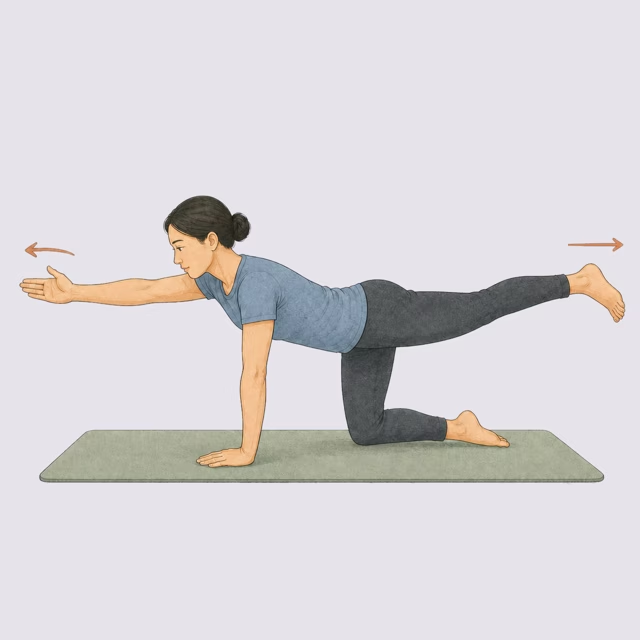
How to do it
- Set up in the illustrated position and keep the breath slow.
- Reach one arm and the opposite leg, return to the start, then immediately alternate to the other side.
- Keep alternating left and right for the timed interval while the pelvis and trunk stay steady.
Check your form
- Each repetition extends one arm and the opposite leg together before returning to the start.
- Left and right alternate continuously while the pelvis and trunk stay steady.
Muscles worked
- Erector Spinae — primary target
A long muscle group along both sides of the spine, from neck to pelvis. Core posture muscle—strained by prolonged sitting or bending.
- Multifidus — primary target
A muscle around the deep muscles beside the spine that helps with spinal stability and turning control. It often tightens after long sitting, bending forward, or sudden twisting.
- Gluteus Maximus — also involved
One of the body's largest muscles, forming the buttock contour. Handles hip extension. Weakened by prolonged sitting.
Safety cues
- Keep the movement gentle; do not force the end range.
- Stop if you feel sharp pain, numbness, or radiating symptoms.
Stop if
- Discomfort becomes sharp or changes into tingling.
Panda Stretch is for general wellness, not medical diagnosis or treatment.
Background
A spinal control and gentle flexion, extension, or rotation drill focused on stability, breath, and pain-free range; not a medical diagnosis.
References used by the Panda Stretch movement library:
- ACSM Position Stand (2011)
- Physiopedia: Erector Spinae (2024)
Written by the Panda Stretch team. Steps, safety cues and muscle data come from the Panda Stretch app's movement library. Last updated 2026-09-23.
Follow along with Pan
In the app, this movement plays as a timed, guided demonstration inside short routines for desk breaks, mornings and evenings.