
Eagle Arms Stretch
Targets the Rhomboids. A guided movement from the Panda Stretch app.
- PositionStanding
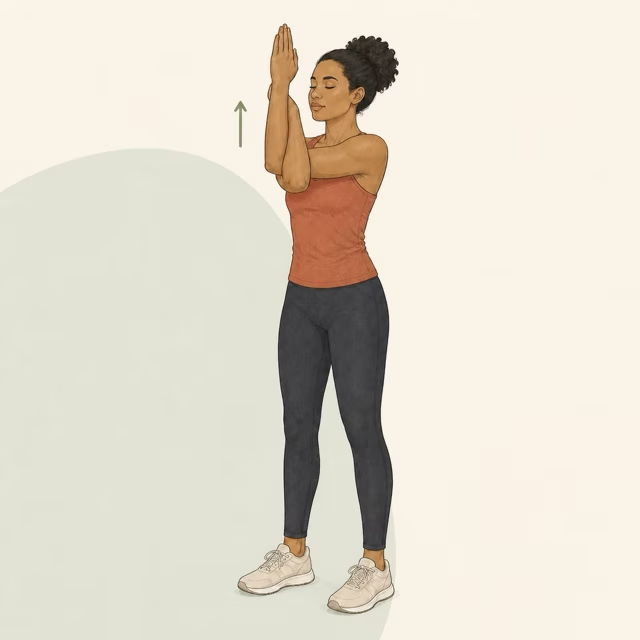
How to do it
- Raise your arms forward and cross one elbow over the other.
- Bring forearms together or palms toward each other.
- Lift elbows slightly and reach forward for 20-30 seconds.
Check your form
- Stretch sensation appears between shoulder blades.
- Upper back feels less stiff after the hold.
- No neural pain down the arm.
When it helps
- Mid-back tightness from prolonged sitting.
- Scapular tension after upper-body training.
Muscles worked
- Rhomboids — primary target
Deep rhombus-shaped muscles on the inner scapula. Forward-leaning posture stretches and weakens them, causing upper back pain.
- Deltoid — also involved
The deltoid wraps the shoulder joint in three heads (front, middle, rear). Used in all arm-raising and push-pull motions. Prone to injury from overtraining or poor form.
Safety cues
- Avoid forcing wrists if shoulder mobility is limited.
- Keep ribs down and avoid excessive trunk rounding.
- Do not continue with sharp scapular pain.
Stop if
- Front shoulder pinching worsens.
- Neck pain increases despite reducing range.
Panda Stretch is for general wellness, not medical diagnosis or treatment.
Background
Applied in scapular mobility and posterior shoulder flexibility routines.
References used by the Panda Stretch movement library:
- Physiopedia: Rhomboids (2024)
- Posterior Shoulder Stretching Review (2019)
- Harvard Health Stretching Routine (2024)
Written by the Panda Stretch team. Steps, safety cues and muscle data come from the Panda Stretch app's movement library. Last updated 2026-09-23.
Follow along with Pan
In the app, this movement plays as a timed, guided demonstration inside short routines for desk breaks, mornings and evenings.